Introduction: Navigating the Plastic Dilemma
Plastic is everywhere in modern life—lightweight, durable, and cheap. From water bottles to food packaging, its convenience is undeniable. Yet, this convenience comes with a serious environmental cost. Most plastics take centuries to decompose, and vast quantities end up in landfills, oceans, and ecosystems. In Australia alone, during 2018–2019, about 85% of plastic waste went to landfill.
Understanding the types of plastics, how recycling works, and its limitations is essential for responsible waste management. Resources like Plastic Recycling Guide can help you make informed choices and ensure your recycling efforts are effective.
1. Understanding the 7 Types of Plastics
Plastics are categorized using the Resin Identification Code (RIC), a small number (1–7) inside a triangle of arrows found on most items. This code identifies the polymer type but does not guarantee recyclability. Here’s a consumer-friendly breakdown:
Code #1: PET (Polyethylene Terephthalate)
- Examples: Water and soda bottles, peanut butter jars.
- Recyclability: Widely recycled; can be “bottle-to-bottle” recycled or downcycled into polyester fibers for clothing, carpets, and bags.
Code #2: HDPE (High-Density Polyethylene)
- Examples: Milk jugs, detergent bottles, grocery bags.
- Recyclability: Highly recyclable; often reused for bottles, plastic lumber, park benches, or pipes.
Code #3: PVC (Polyvinyl Chloride)
- Examples: Pipes, window frames, cling wrap.
- Recyclability: Rarely accepted curbside; contains hazardous chemicals and contaminates other plastics.
Code #4: LDPE (Low-Density Polyethylene)
- Examples: Grocery bags, plastic wrap, garbage bags.
- Recyclability: Technically recyclable but problematic; tangles in machinery and rarely collected curbside.
Code #5: PP (Polypropylene)
- Examples: Yogurt tubs, takeout containers, prescription bottles.
- Recyclability: Limited; only a small fraction is recycled due to high processing costs.
Code #6: PS (Polystyrene)
- Examples: Foam cups, packing peanuts, disposable cutlery.
- Recyclability: Very limited; bulky and lightweight, often requires specialized equipment, mostly landfilled.
Code #7: Other / Mixed Plastics
- Examples: Electronics casing, sunglasses, some bioplastics.
- Recyclability: Rarely recycled; mixed or layered materials make processing impossible.
Understanding these codes helps consumers separate plastics correctly and manage waste more effectively.
2. How Plastic Recycling Actually Works
Recycling isn’t as simple as tossing items in a bin. It involves a multi-step industrial process:
Stage 1: Collection
- Plastics are collected via curbside bins or drop-off points.
- Materials are transported to Material Recovery Facilities (MRFs), where large contaminants are manually removed.
Stage 2: Sorting
- Mechanical screens: Separate items by size.
- Air classifiers: Separate light plastics from heavier materials.
- Magnetic separation: Removes metals.
- Optical scanners: Identify plastic type (PET, HDPE, etc.) and direct them to the correct stream.
- Manual inspection: Final quality check to remove contaminants.
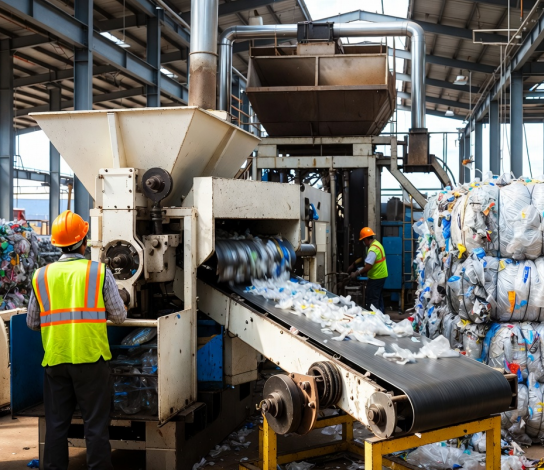
Stage 3: Processing
- Plastics are baled, shredded, washed, and melted into pellets.
- Downcycling: Most plastics degrade in quality with each cycle. PET can sometimes be recycled bottle-to-bottle, but most plastics are downcycled into textiles, lumber, or other products, eventually reaching a terminal stage.
3. Why Isn’t All Plastic Recycled?
Globally, only 5–9% of plastics are effectively recycled. Barriers include:
Economic Barriers
- Virgin plastic is cheaper than recycled plastic.
- Companies may not invest in costly recycling processes without a profitable market.
Technical Challenges
- Contamination: Food residues or liquids can ruin entire batches.
- Mixing polymers: PVC mixed with PET can contaminate recycling streams.
- Problematic forms: Thin films (LDPE) clog machinery.
- Degradation: Plastics lose strength each cycle, limiting reuse.
Misleading Labels
- The RIC triangle is not a guarantee of recyclability. Only #1 (PET) and #2 (HDPE) are widely recycled. Others often end up in landfills despite the familiar recycling symbol.
4. Practical Tips for Consumers
Even with system limitations, consumers can make a difference:
- Check Local Rules: Recycling rules differ; always follow municipal guidelines.
- Focus on High-Value Plastics: Prioritize #1 PET and #2 HDPE for maximum impact.
- Keep Plastics Clean: Rinse lightly to remove food residue.
- Avoid Wish-Cycling: Don’t place non-recyclables in bins.
- Do Not Bag Recyclables: Bags jam machinery; leave materials loose.
- Support the Market: Buy products with recycled content to create demand.
5. When to Seek Professional Waste Management Help
For large volumes of plastic waste or complex cleanouts, professional services are invaluable. Full Waste Collection Service provides comprehensive support for collection, sorting, and responsible disposal, making the process efficient and stress-free. They handle bulk plastics that may be difficult to recycle at home and ensure compliance with environmental regulations.
Conclusion: Knowledge, Action, and Support
Plastic recycling is complex and limited, but conscious actions can make a difference. Understanding the types of plastics, following proper recycling practices, and leveraging professional services when needed allows households to reduce environmental impact. By combining individual effort with systemic improvements, we can move toward a more sustainable future.